
1. Tribology & Physics of Centrifugal Clutch Glazing
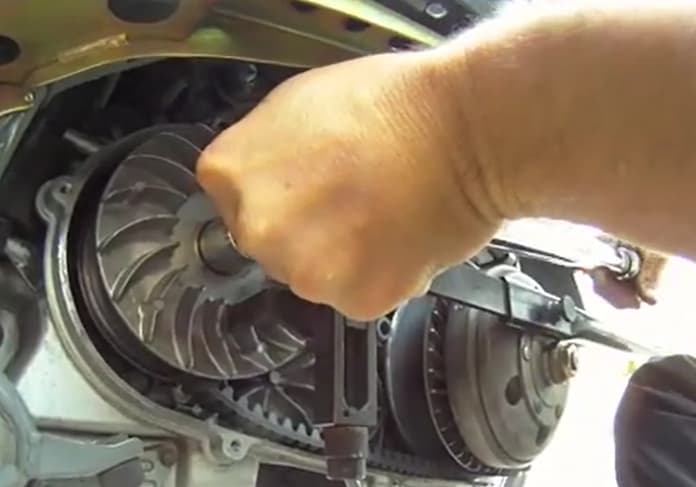
The Suzuki Burgman 400 dry centrifugal clutch utilizes five shoe assemblies pivot-mounted to a carrier plate and restrained by extension springs. As engine RPM rises, centrifugal force overcomes spring tension, causing the organic friction shoes to swing outward and contact the inner circumference of the steel clutch drum (clutch bell).
During initial engagement, a degree of controlled slip occurs until engine speed matches rear wheel road speed. When rider input causes prolonged slipping—such as holding the scooter stationary on an incline using the throttle rather than rear brakes—local friction temperatures at the shoe-to-bell interface rapidly exceed 350°C (662°F).
At these elevated temperatures, two material breakdown phenomena occur:
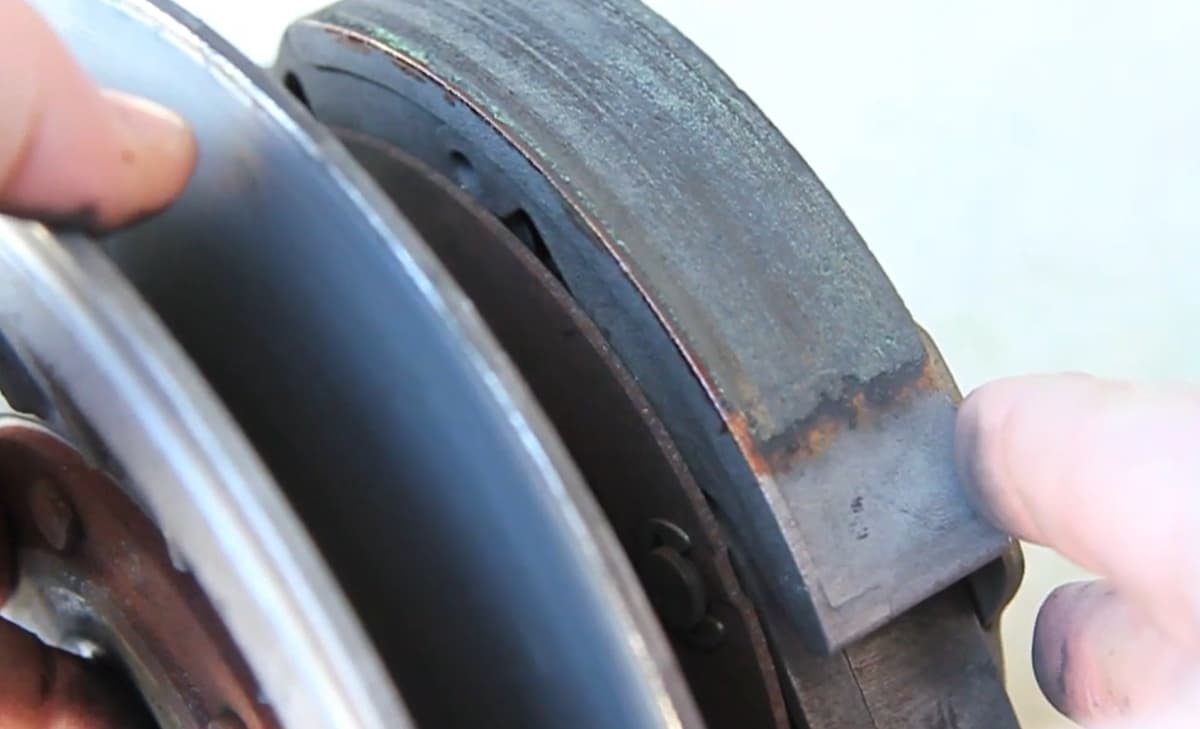
- Phenolic Resin Crystallization: The organic binder resins within the clutch shoe material vaporize and re-deposit onto the shoe surface as a glass-hard, low-friction crystalline glaze. The coefficient of friction ($\mu$) drops abruptly from a nominal 0.38 down to less than 0.18.
- Steel Drum Blue Glazing & Thermal Hot-Spotting: The cast steel clutch bell undergoes localized phase transformations, forming dark blue temper bands and microscopic high spots. As the glazed shoes pass over these thermal hot-spots, the friction coefficient fluctuates violently, creating a high-amplitude torsional vibration (chatter) transmitted directly through the final drive gearbox to the rear wheel.
2. Industrial De-Glazing & Surface Profiling Protocol
To restore stable friction characteristics and eliminate launch shudder, mechanics must execute a dual-surface conditioning protocol using specific abrasive grit values:
A. Clutch Bell Interior Surface Refinishing:
- Inspect the inner drum surface for severe scoring deeper than 0.20 mm. If scoring exceeds this depth, replace the drum (OEM Part: 22100-05H00).
- If surface scoring is minimal, mount the clutch drum in a lathe or rotating fixture. Using 120-grit silicon carbide abrasive paper, sand the inner drum perimeter using a 45-degree cross-hatch motion. Continue until all blue heat discoloration and glass-like sheen are completely removed, leaving a uniform matte satin finish.
- Clean the internal drum surface using unchlorinated brake parts cleaner and clean lint-free shop towels until a white rag shows zero black metallic residue.
B. Clutch Shoe Friction Pad Conditioning:
- Using a brass wire brush, remove accumulated clutch dust from between the shoe pivots and extension spring hooks.
- Place a sheet of 80-grit aluminum oxide sandpaper flat on a precision glass plate. Lightly rub each friction pad in a figure-eight pattern across the paper until the shiny, vitrified surface layer is removed, exposing fresh, dark friction compound.
- Using a small triangular file, chamfer the leading edge of each friction shoe at a 30-degree angle to a depth of 1.5 mm. Chamfering prevents the leading edge of the shoe from digging or grabbing against the drum during initial engagement.
3. Suzuki Maxi-Scooter Transmission Torque & Tolerance Matrix
Precision assembly requires strict adherence to factory torque specifications and wear tolerances. The table below outlines single-source-of-truth values for the Burgman 200, 400, and 650 platforms:
| Platform / Model | Component Specification | OEM Standard Value | Service Limit (Replace) | Factory Torque Spec |
|---|---|---|---|---|
| Suzuki Burgman 400 (AN400) | CVT V-Belt Width | 28.5 mm (1.122 in) | 27.0 mm (1.063 in) | N/A (Inspect Every 6,000 mi) |
| Suzuki Burgman 400 (AN400) | Front Variator Nut | M16 x 1.5 Thread | Replace if threads stretched | 105 Nm (77.5 lbf·ft) |
| Suzuki Burgman 400 (AN400) | Rear Clutch Bell Nut | M14 x 1.5 Thread | Replace if damaged | 85 Nm (62.5 lbf·ft) |
| Suzuki Burgman 400 (AN400) | Shoe Lining Thickness | 4.5 mm (0.177 in) | 2.0 mm (0.079 in) | N/A |
| Suzuki Burgman 650 (AN650) | SECVT Stopper Bolt | M8 x 1.25 Special Bolt | Inspect tip wear < 0.5mm | 28 Nm (20.5 lbf·ft) |
| Suzuki Burgman 200 (UH200) | Rear Clutch Bell Nut | M12 x 1.25 Thread | Single-use locknut | 55 Nm (40.5 lbf·ft) |
Compare these specifications with rival maxi-scooter systems detailed in the Yamaha Majesty 400 Guide and Suzuki Burgman 200 Guide.
4. Final Drive Bearing & Oil Service Standards
In addition to clutch servicing, final drive gearbox health must be audited during every CVT maintenance interval. High-mileage Burgman 400 models can develop final drive input shaft bearing axial play.
Gearbox Audit Procedure:
- Drain the final drive gear oil. Inspect the magnetic drain plug for metallic shards or silver slurry. Fine grey metallic haze is normal; chunks or flakes larger than 1.0 mm indicate gear tooth spalling or bearing cage failure.
- Grasp the final drive input shaft by hand and check for radial play using a dial indicator. Radial play must not exceed 0.05 mm. If play exceeds this limit, replace the dual deep-groove ball bearings (OEM Part: 08110-62044).
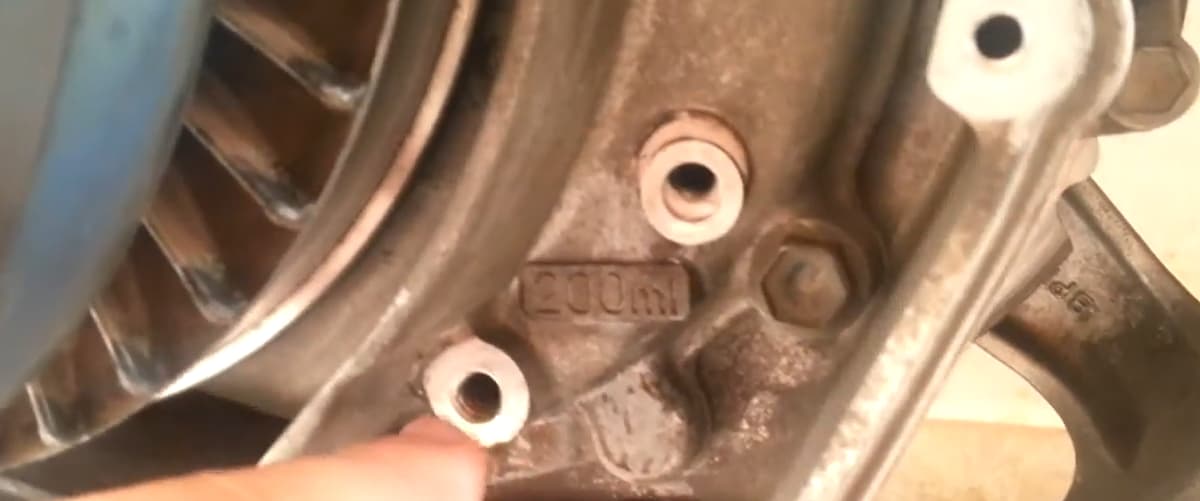
- Refill gearbox with high-grade SAE 75W-90 GL-5 synthetic gear lubricant. For the AN400, exact refill volume is 200 ml (6.8 US oz) after draining.
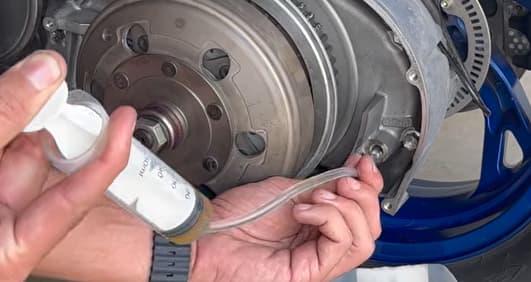
Figure 4: Using a graduated 60 ml syringe to inject exactly 200 ml of fresh gear oil into the final drive fill port without overfilling. Enforcing these rigorous inspection criteria, de-glazing protocols, and torque limits guarantees smooth, chatter-free launches and long-term transmission reliability on all Suzuki Burgman maxi-scooters.

About the Author: Gregório
Industrial Administrator & Lean Manufacturing Consultant. Technology enthusiast passionate about bridging industrial process engineering with technical publishing. With a background in waste elimination, standardized specifications, and zero-rework quality control, Gregório curates the Motor Scooter Parts technical database to provide mechanics and DIY riders with field-tested OEM torque tolerances and precision diagnostic standards.